


By: Zain Siddiqui
The Power of Pop-Ups:
Why Immersive Retail Is Becoming a Brand Imperative
For years, marketers have debated the future of physical retail. Yet while traditional storefronts are under pressure, a different format is accelerating quietly but undeniably: the immersive retail pop-up. What began as a novelty has matured into a strategic tool for brands looking to cut through cultural noise, deepen consumer connection, and create moments that deliver both attention and revenue.
Across North America, these limited-time brand worlds are outperforming expectations. They’re drawing lineups, generating social heat, and creating a level of experiential stickiness digital channels can’t replicate. The question is no longer whether pop-ups matter; it’s why so many brands are now betting on them.
Why Immersive Pop-Ups Are Surging Now
The rise of immersive retail is not a fad. It’s a response to several converging forces reshaping consumer behavior.
#1. Attention fragmentation
Consumers now live inside dozens of digital micro-ecosystems. Traditional advertising struggles to create a singular moment of focus. Pop-ups counter that by offering high-intensity, high-attention environments that feel unmistakably different from everyday retail.
#2. Decline of permanent retail footprints
Many brands operating mostly online, or with limited physical presence, need a way to manifest themselves in the real world without committing to long-term leases. Pop-ups provide a lower-risk, higher-impact alternative.
#3. The rise of fandom culture
Communities rally around the things they love: gaming, sports, collectibles, beauty, sneakers, anime. Brands that build spaces for these fandoms earn disproportionate cultural equity. Pop-ups are designed for this type of emotional gravity.
#4. Scarcity as a growth lever
Limited time drives urgency. When something exists for 30, 60, or 90 days, consumers see it as an event, not a store. That psychological shift is powerful, and it drives both traffic and earned media.
What Makes an Immersive Pop-Up So Effective
The strongest pop-ups today aren’t just spaces that sell product. They’re brand-built ecosystems.
• Experiential worlds that translate a brand’s identity into tactile, sharable moments.
• Interactive zones that trigger participation: gameplay, customization, discovery, live demonstrations.
• Collaboration spaces where brand x brand partnerships fuel hype and credibility.
• Community-first design that encourages visitors to linger, share, and return.
In short, pop-ups aren’t a retail tactic, they’re a cultural activation strategy.
Case Example: EB Trends Collectors Vault, Toronto Eaton Centre
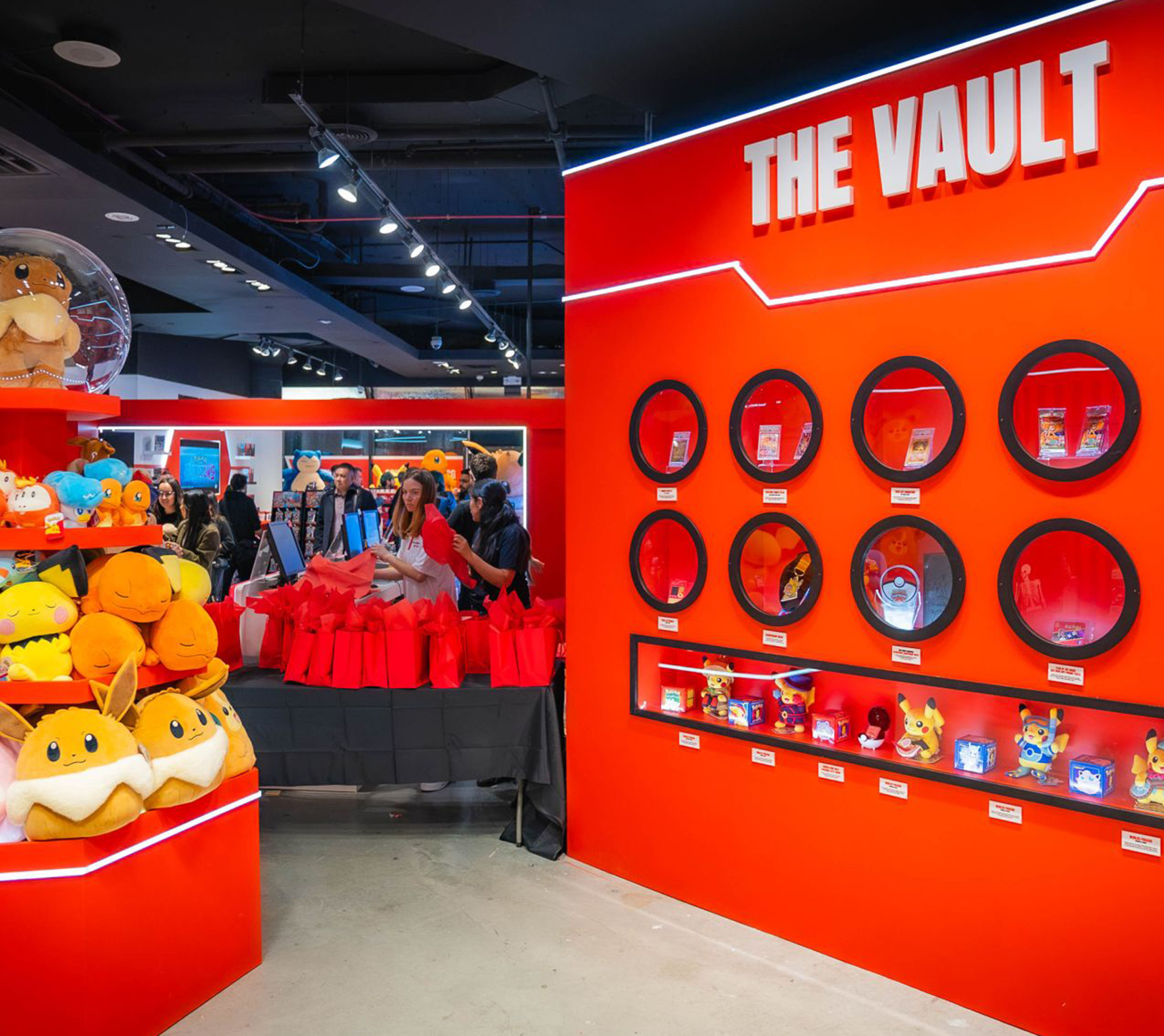
One of the clearest examples of this shift can be seen in the EB Trends Collectors Vault pop-up – A Pokémon focussed retail store at the Eaton Centre. Designed and brought to life by VIBRANT in partnership with EB Games, the three-month experience functions as a hybrid between retail, fandom, and play.
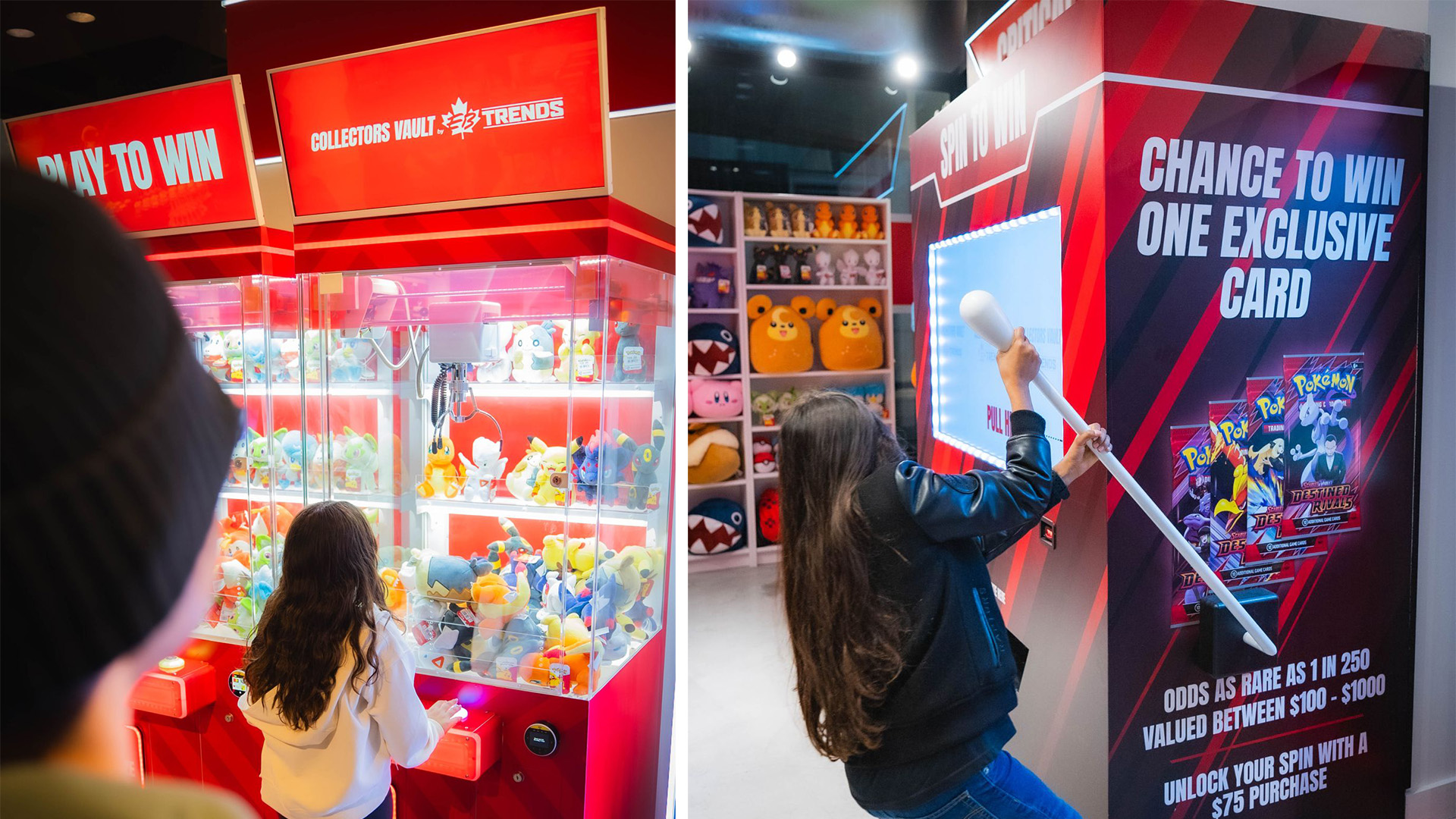
Inside, visitors find trading cards, sought-after collectibles, plushies, and limited-edition drops that tap directly into fan culture. A jackpot machine and crane game create arcade-style interaction. A card-unpacking zone turns opening a pack into a mini-event, complete with rare-pull moments. A Nintendo zone adds a brand-world collaboration layer.
The result: a fully immersive space where fans don’t just shop, they participate. The store drew lineups for its first three days and even random drop days, driven by scarcity, novelty, and the cultural magnetism of the experience. It demonstrates how a pop-up can function as a fandom hub, commerce engine, and brand-equity builder all at once.
Brands Already Leading the Way
The world is seeing a surge in fandom-first pop-ups built around major IP and brands, the kind of limited-time worlds that generate lineups, exclusivity, and cultural heat.
Pokémon x Hypebeast Pop-Up
A collaboration that merged gaming IP with streetwear culture, the Pokémon x Hypebeast store delivered capsule merchandise and exclusive collectibles in a limited-time drop format. Hypebeast’s experiential team turned the space into a culture-meets-fandom intersection, attracting collectors, resellers, and fashion crowds alike.
Stranger Things: The Official Store
Netflix created a touring retail world that landed in cities like LA, New York, and Chicago, blending immersive sets with exclusive merch. Executed with experiential partner Fever, the pop-up functioned as a hybrid between a show universe and a shop, driving enormous social media reach.
Harry Potter Wizarding World Pop-Ups
Warner Bros. and Thinkwell Group have built short-term shops tied to Harry Potter experiences, complete with wand stations, potion displays, and limited-edition collectibles. These activations turn nostalgia and global fandom into retail momentum.
HOKA “HOKA Mart” Convenience-Store Pop-Up
One of the most culturally clever brand-led pop-ups in recent years, HOKA transformed a temporary space into a retro corner store filled with reimagined “run lifestyle” goods, merch, and limited product drops. Designed to reposition the brand from performance-only to culture-forward, the activation demonstrated how even non-IP brands can win by world-building.
1664 Re: Collection
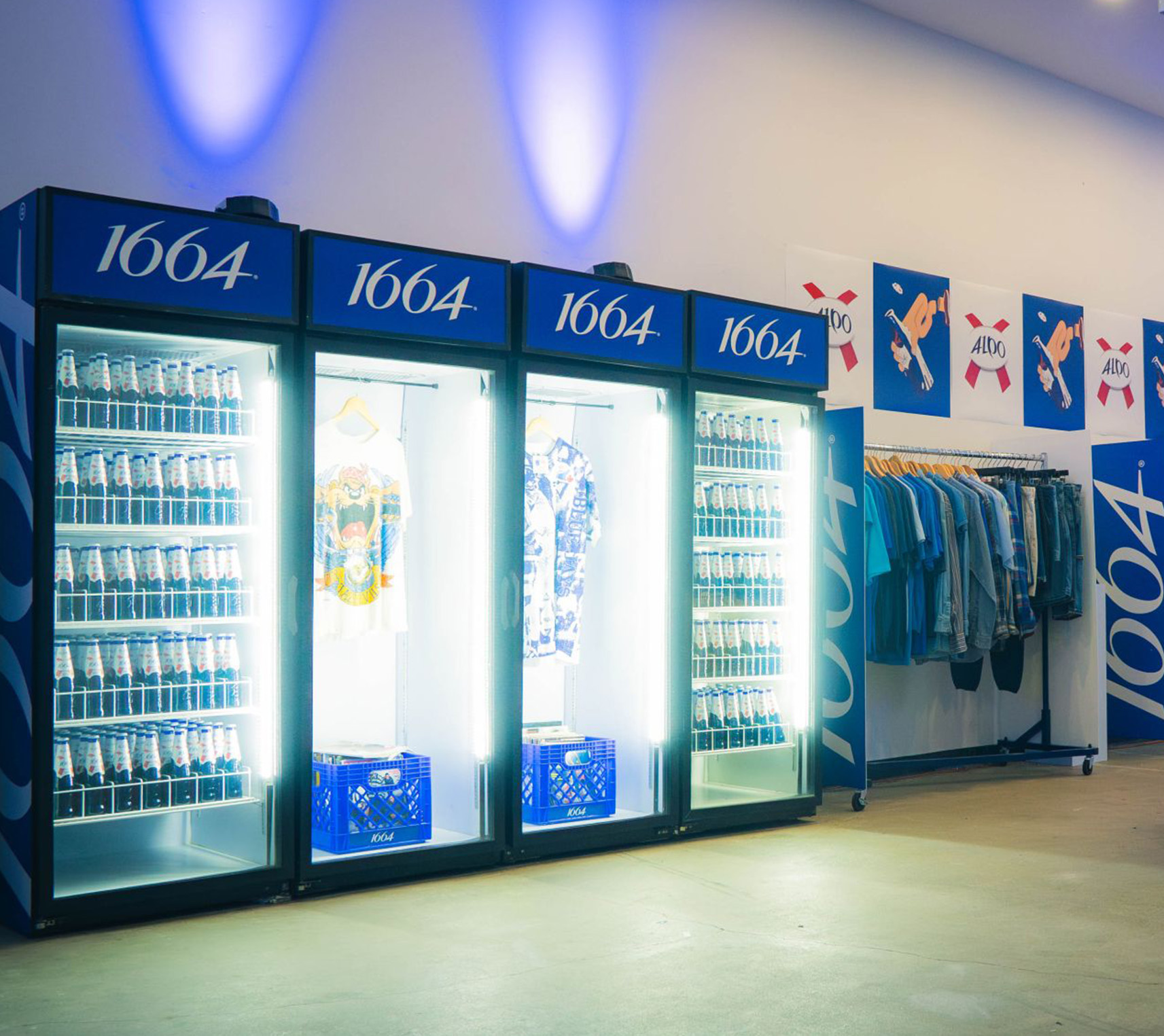
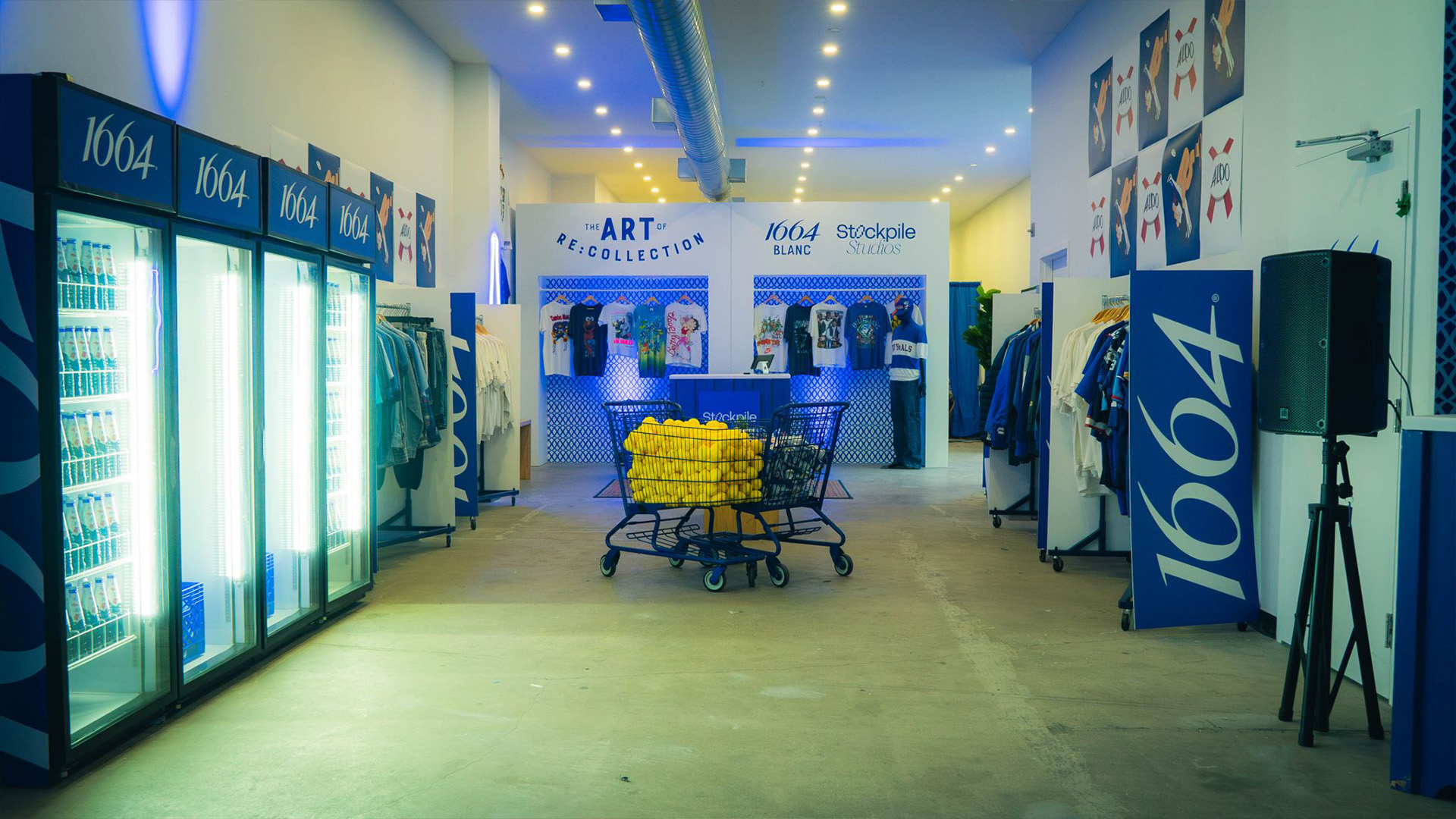
Vibrant created 1664 Re:Collection as a premium, fashion-led pop-up that reframed 1664 Blanc as a cultural curator. Built with partners like vintage retailer Stockpile and Knight Chess, the experience blended curated retail, limited-edition merch, and cultural programming, positioning beer as part of a broader lifestyle moment rather than the main event.
Different categories, different audiences, same truth: when done well, immersive pop-ups create cultural gravity.
Why Pop-Ups Are Becoming a Long-Term Brand Strategy
This is not a trend cycle. The economics and consumer psychology behind pop-ups make them increasingly critical for brand growth.
• They provide physical presence for brands with minimal retail footprints.
• They act as test labs for new product assortments, price points, or formats.
• They create emotional proximity by surrounding consumers in the brand world.
• They foster deeper memory encoding because the experience is rare, interactive, and time-bound.
• They generate measurable impact across traffic, sales, dwell time, content creation, and brand lift.
Pop-ups are essentially the modern flagship, only agile, collaborative, and culturally responsive.
What Brands Often Miss
Even as pop-ups grow, many brands misfire by treating them like decorated stores rather than cultural experiences. Several principles separate average pop-ups from unforgettable ones:
• Make it participatory, not passive.
• Make it world-building, not product-forward.
• Make it limited, not evergreen.
• Make it collaborative, not isolated.
• Make it shareable, not staged.
Consumers don’t line up for shelves. They line up for culture.
Where This Is Heading
The future of retail belongs to brands that understand how to build temporary worlds with lasting impact. Immersive pop-ups give marketers a chance to operate outside traditional constraints, to design experiences that collapse the distance between brand and fan.
And when executed with strategic intent, they become more than a moment. They become a model for how brands show up in real life, boldly, culturally, and meaningfully.
IF YOU’RE EXPLORING HOW IMMERSIVE RETAIL COULD ELEVATE YOUR BRAND, WE’RE ALWAYS OPEN TO A CONVERSATION.